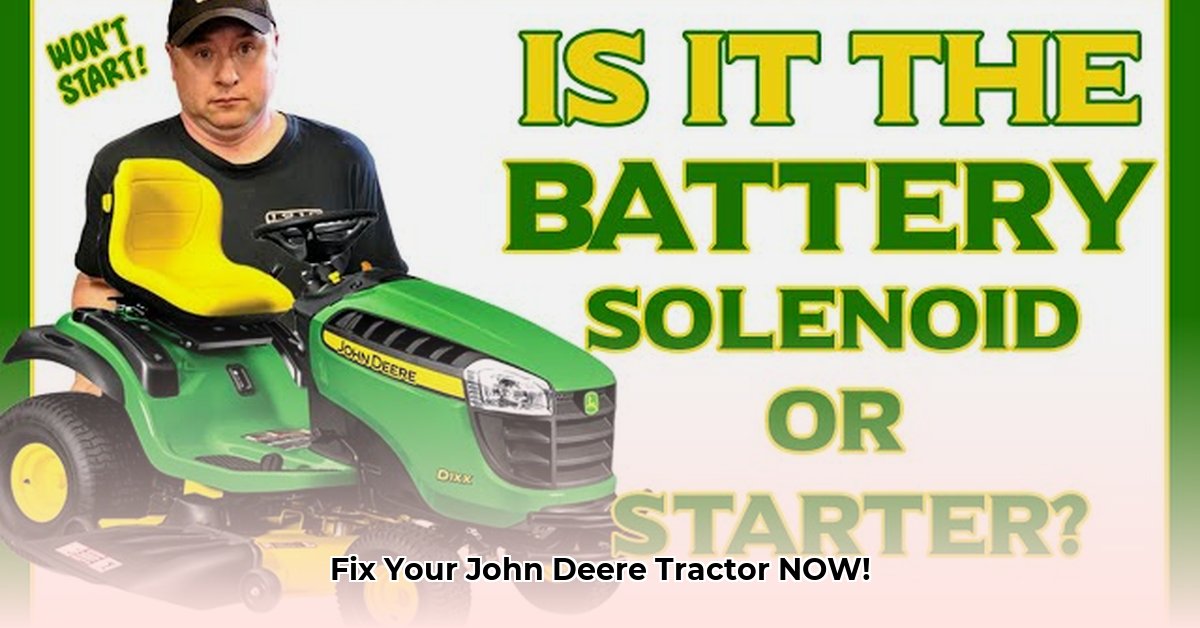
Diagnosing John Deere Tractor Starting Issues: A Step-by-Step Guide
Experiencing starting problems with your John Deere tractor? This comprehensive guide provides actionable steps to diagnose and resolve common issues, from simple fixes to more complex repairs. We’ll cover everything from battery checks to advanced diagnostics, ensuring you get your tractor back up and running efficiently. Remember, safety is paramount—always disconnect the negative battery terminal before beginning any work. For more in-depth troubleshooting, see our detailed guide.
Safety First: Essential Precautions
Before attempting any repairs, prioritize safety. Always disconnect the negative battery terminal to prevent electrical shocks. Wear safety glasses to protect your eyes from potential sparks, and use insulated gloves to protect your hands. Never work alone; have a helper present for assistance and safety.
Visual Inspection: Identifying Potential Problems
A thorough visual inspection is the first step in troubleshooting. Look for any visible signs of damage or malfunction:
Battery Condition: Check the battery for damage, corrosion (that whitish-green gunk on the terminals), or loose connections. Clean corroded terminals with a wire brush. A low battery charge is a common culprit for starting problems.
Terminal Connections: Ensure all battery terminals are securely fastened and free of corrosion. Loose terminals interrupt the electrical flow.
Starter Motor Examination: Inspect the starter motor for physical damage (dents, cracks), loose mounting bolts, or any signs of leaks (oil or fuel). Leaks indicate potential issues needing attention.
Wiring Integrity: Carefully examine all wiring connected to the starter motor and battery. Look for frayed wires, cuts, or loose connections. Damaged wiring can dramatically impact functionality.
Fuel/Oil Line Inspection: Check fuel and oil lines near the starter motor for any leaks. Leaks can disrupt the function of the starter motor and cause malfunctions.
Basic Electrical Tests: Using a Multimeter
A multimeter is a handy tool for diagnosing electrical problems. Here are some essential tests:
Battery Voltage Test: A fully charged 12-volt battery should read around 12.6 volts. Lower readings indicate the battery needs charging or replacement.
Starter Solenoid Test: With the key in the start position, use the multimeter to measure the voltage across the solenoid terminals. No voltage? Check the wiring to the ignition switch. Voltage present but no starter engagement? The solenoid may be faulty.
Wiring Continuity Check: Use the multimeter to check the continuity of all wiring connected to the starter motor. This helps identify broken circuits, which can fully impede the system.
Troubleshooting Specific Problems
Let's address some common starting scenarios:
Clicking Sound: A clicking sound often points to a low battery, a faulty starter solenoid, or corroded connections. Prioritize checking battery charge & terminal cleanliness.
No Crank, No Start: Begin by checking the battery voltage, wiring continuity, and the starter solenoid. A systematic approach is vital.
Smoke from the Starter: Smoke from the starter motor is a serious issue, suggesting substantial electrical problems. Immediately disconnect the battery and seek professional help. Never attempt repairs when seeing smoke.
Simple Repairs: DIY Fixes
Some minor repairs can be performed easily:
Cleaning Battery Terminals: Cleaning corroded battery terminals can often restore proper connections.
Tightening Loose Connections: Tightening loose connections can resolve issues quickly.
Important: For complex repairs beyond these basic steps, professional assistance is crucial. Improper repairs can cause further damage and potential injury.
Preventive Maintenance: Prolonging Starter Lifespan
Regular maintenance prevents future problems. Implement these proactive measures:
Regular Battery Terminal Cleaning: Regular cleaning prevents corrosion buildup, ensuring optimal conductivity.
Periodic Wiring Inspections: Regular inspections help detect issues before they cause significant problems. Replace damaged wiring promptly.
Scheduled Starter Motor Checks: Have a qualified mechanic inspect the starter motor during your routine tractor maintenance. This preventative measure provides early detection of potential problems.
By following these steps and prioritizing preventative maintenance, you can significantly reduce the frequency of John Deere tractor starting problems and maintain peak operational performance. Remember to consult your owner's manual for tractor-specific maintenance instructions.